-
-
-
- Challenges and Chances: A Review of the 1st Stem Cell Community Day
- Summertime, and the Livin’ Is Easy…
- Follow-on-Biologics – More than Simple Generics
- Bacteria Versus Body Cells: A 1:1 Tie
- Behind the Crime Scene: How Biological Traces Can Help to Convict Offenders
- Every 3 Seconds Someone in the World Is Affected by Alzheimer's
- HIV – It’s Still Not Under Control…
- How Many Will Be Convicted This Time?
- Malaria – the Battle is Not Lost
- Physicians on Standby: The Annual Flu Season Can Be Serious
- At the Forefront in Fighting Cancer
- Molecular Motors: Think Small and yet Smaller Again…
- Liquid Biopsy: Novel Methods May Ease Cancer Detection and Therapy
- They Are Invisible, Sneaky and Disgusting – But Today It’s Their Special Day!
- How Many Cells Are in Your Body? Probably More Than You Think!
- What You Need to Know about Antibiotic Resistance – Findings, Facts and Good Intentions
- Why Do Old Men Have Big Ears?
- The Condemned Live Longer: A Potential Paradigm Shift in Genetics
- From Research to Commerce
- Chronobiology – How the Cold Seasons Influence Our Biorhythms
- Taskforce Microbots: Targeted Treatment from Inside the Body
- Eyes on Cancer Therapy
-
-

-
-
-
- Challenges and Chances: A Review of the 1st Stem Cell Community Day
- Summertime, and the Livin’ Is Easy…
- Follow-on-Biologics – More than Simple Generics
- Bacteria Versus Body Cells: A 1:1 Tie
- Behind the Crime Scene: How Biological Traces Can Help to Convict Offenders
- Every 3 Seconds Someone in the World Is Affected by Alzheimer's
- HIV – It’s Still Not Under Control…
- How Many Will Be Convicted This Time?
- Malaria – the Battle is Not Lost
- Physicians on Standby: The Annual Flu Season Can Be Serious
- At the Forefront in Fighting Cancer
- Molecular Motors: Think Small and yet Smaller Again…
- Liquid Biopsy: Novel Methods May Ease Cancer Detection and Therapy
- They Are Invisible, Sneaky and Disgusting – But Today It’s Their Special Day!
- How Many Cells Are in Your Body? Probably More Than You Think!
- What You Need to Know about Antibiotic Resistance – Findings, Facts and Good Intentions
- Why Do Old Men Have Big Ears?
- The Condemned Live Longer: A Potential Paradigm Shift in Genetics
- From Research to Commerce
- Chronobiology – How the Cold Seasons Influence Our Biorhythms
- Taskforce Microbots: Targeted Treatment from Inside the Body
- Eyes on Cancer Therapy
-
-
- ホーム
- Beyond Science
- Off the Bench
- Bright Minds
- Learning While Dreaming
Learning While Dreaming
生命科学の探究
- Off the Bench
- Bright Minds
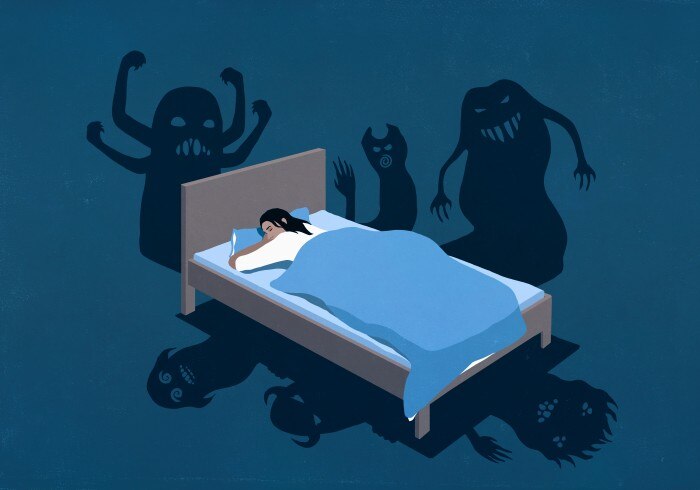
Actively glean knowledge, overcome fears or practice athletic skills: it is all possible in a lucid dream
The man who flew out of his kitchen
Daniel Erlacher, a sports scientist and psychologist at the University of Bern, fell upon the topic as a student, mostly by coincidence. “I was reading a book by Stephen LaBerge, a pioneer of lucid dreaming research. At first it all sounded pretty esoteric to me, but I was keen to try out the techniques that were described in it.” A few weeks later, Erlacher had his first lucid dream. In it, he was playing basketball in his parents’ kitchen, realized he was dreaming, jumped out of the window and flew around the house. “Being able to control my behavior in the dream was so fascinating that I developed the focus of my research, and later my doctorate, around it.”
Lucid dreams are a long-recognized phenomenon, described even by Aristotle. Eventually, in 1913, Dutch doctor Frederik van Eeden coined the term “lucid dream” that we now use. In the late twentieth century, a clever trick delivered a scientific breakthrough: researchers and their test subjects agreed on specific eye movements to complete during sleep — twice to the left, twice to the right — as soon as they realized they were dreaming. The movements were recorded in the sleep laboratory and confirmed: lucid dreaming is real.
Sleeping, dreaming and practicing your throw
Erlacher was fascinated and asked himself whether lucid dreams could prove useful for mental training, which improves certain motor skills while awake. Why could that not also work in a dream? He and his team got their study participants to follow simple exercises during lucid dreaming, such as flipping a coin or tapping their fingers in a specific rhythm. Upon awaking in a sleep laboratory, the researchers had them repeat the movements and confirmed improvements. “These are promising results, even if lucid dreaming as a targeted training in sports remains rare,” says Erlacher.
もっと読む
But the benefits reach beyond sports. For instance, some people are able to overcome their recurring nightmares using lucid dreaming. Currently being tested in clinical research is whether psychotherapeutic methods such as “Imagery Rehearsal Therapy” (IRT) can be used in conjunction with lucid dreaming. In IRT, affected people visualize their nightmares while awake and rewrite them mentally, for example, by transforming a monster into a cuddly cat, or laying down a thick mat on the spot where they always fall. Studies from France and Austria, among others, have shown positive effects: after six weeks of lucid dreaming training at the University of Vienna, anxiety and depression levels among PTSD sufferers had decreased measurably.

What does your body do in a lucid dream?
Practices such as keeping a dream diary or performing reality checks can be helpful; if you repeatedly ask yourself during the day whether you are dreaming, you will eventually carry this routine into the dream sphere – allowing you to recognize the illusion. Waking up in the middle of the night and going back to sleep with a clear intention in mind can also help.
A particularly gripping aspect for Erlacher is how we experience our bodies while dreaming. Do they feel the same as they do while awake, or do they instead perhaps feel completely different? “These questions dive deep into the basic research of consciousness and body image, and I’m not sure if we’ll get the answers in the near future,” says Erlacher. “Because lucid dreaming is still a mystery, and studying it with many more people could rob a little of its magic.”
About:
Daniel Erlacher is an associate professor in the Department of Movement and Exercise Science at the University of Bern. He specializes in the field of lucid dreaming and studies how these dreams can contribute to the improvement of athletic skills and mental resilience.
もっと読む