メニュー
JP | JPY
-
-
-
- Challenges and Chances: A Review of the 1st Stem Cell Community Day
- Summertime, and the Livin’ Is Easy…
- Follow-on-Biologics – More than Simple Generics
- Bacteria Versus Body Cells: A 1:1 Tie
- Behind the Crime Scene: How Biological Traces Can Help to Convict Offenders
- Every 3 Seconds Someone in the World Is Affected by Alzheimer's
- HIV – It’s Still Not Under Control…
- How Many Will Be Convicted This Time?
- Malaria – the Battle is Not Lost
- Physicians on Standby: The Annual Flu Season Can Be Serious
- At the Forefront in Fighting Cancer
- Molecular Motors: Think Small and yet Smaller Again…
- Liquid Biopsy: Novel Methods May Ease Cancer Detection and Therapy
- They Are Invisible, Sneaky and Disgusting – But Today It’s Their Special Day!
- How Many Cells Are in Your Body? Probably More Than You Think!
- What You Need to Know about Antibiotic Resistance – Findings, Facts and Good Intentions
- Why Do Old Men Have Big Ears?
- The Condemned Live Longer: A Potential Paradigm Shift in Genetics
- From Research to Commerce
- Chronobiology – How the Cold Seasons Influence Our Biorhythms
- Taskforce Microbots: Targeted Treatment from Inside the Body
- Eyes on Cancer Therapy
-
-

-
-
-
- Challenges and Chances: A Review of the 1st Stem Cell Community Day
- Summertime, and the Livin’ Is Easy…
- Follow-on-Biologics – More than Simple Generics
- Bacteria Versus Body Cells: A 1:1 Tie
- Behind the Crime Scene: How Biological Traces Can Help to Convict Offenders
- Every 3 Seconds Someone in the World Is Affected by Alzheimer's
- HIV – It’s Still Not Under Control…
- How Many Will Be Convicted This Time?
- Malaria – the Battle is Not Lost
- Physicians on Standby: The Annual Flu Season Can Be Serious
- At the Forefront in Fighting Cancer
- Molecular Motors: Think Small and yet Smaller Again…
- Liquid Biopsy: Novel Methods May Ease Cancer Detection and Therapy
- They Are Invisible, Sneaky and Disgusting – But Today It’s Their Special Day!
- How Many Cells Are in Your Body? Probably More Than You Think!
- What You Need to Know about Antibiotic Resistance – Findings, Facts and Good Intentions
- Why Do Old Men Have Big Ears?
- The Condemned Live Longer: A Potential Paradigm Shift in Genetics
- From Research to Commerce
- Chronobiology – How the Cold Seasons Influence Our Biorhythms
- Taskforce Microbots: Targeted Treatment from Inside the Body
- Eyes on Cancer Therapy
-
-
JP | JPY
Sorry, we couldn't find anything on our website containing your search term.
- ホーム
- Beyond Science
- Off the Bench
- Inspiring Science
- Why Are Our Brains so Big
Why Are Our Brains so Big?
生命科学の探究
- Off the Bench
- 心を動かすサイエンス
We apparently have two uniquely human genes to thank for our cognitive abilities.
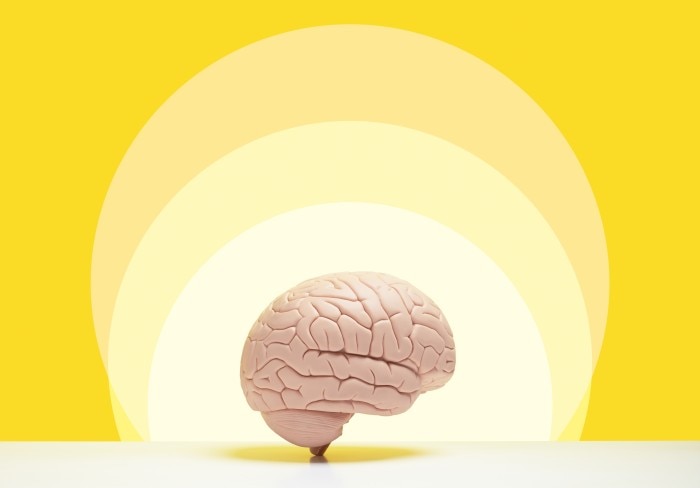
Humans possess, with respect to our body size, unusually large and extremely cognitively skilled brains. The neocortex in particular, a part of the cerebrum, is proportionally three times larger than that of our closest relation, the chimpanzee. Researchers from the German Primate Center — the Leibniz Institute for Primate Research and the Max Planck Institute of Molecular Cell Biology and Genetics — explain why the human brain is so unique in its size and complexity. Their experiments with mice showed that human-specific sections of a certain gene family work together during embryonic development in such a way as to stimulate brain growth.
Specifically, the NOTCH2NLB gene ensures that the progenitor cells of brain cells multiply more heavily, while the NBPF14 gene develops new neurons out of those precursor cells. The number of brain cells is not the only thing that increases, however, as the cerebral cortex gains folds to a greater extent as well. This folding (called gyrification) is vital, because the enlarged neocortex would otherwise simply not fit inside the tight space of the cranium.
Specifically, the NOTCH2NLB gene ensures that the progenitor cells of brain cells multiply more heavily, while the NBPF14 gene develops new neurons out of those precursor cells. The number of brain cells is not the only thing that increases, however, as the cerebral cortex gains folds to a greater extent as well. This folding (called gyrification) is vital, because the enlarged neocortex would otherwise simply not fit inside the tight space of the cranium.
もっと読む