メニュー
JP | JPY
-
-
-
- Challenges and Chances: A Review of the 1st Stem Cell Community Day
- Summertime, and the Livin’ Is Easy…
- Follow-on-Biologics – More than Simple Generics
- Bacteria Versus Body Cells: A 1:1 Tie
- Behind the Crime Scene: How Biological Traces Can Help to Convict Offenders
- Every 3 Seconds Someone in the World Is Affected by Alzheimer's
- HIV – It’s Still Not Under Control…
- How Many Will Be Convicted This Time?
- Malaria – the Battle is Not Lost
- Physicians on Standby: The Annual Flu Season Can Be Serious
- At the Forefront in Fighting Cancer
- Molecular Motors: Think Small and yet Smaller Again…
- Liquid Biopsy: Novel Methods May Ease Cancer Detection and Therapy
- They Are Invisible, Sneaky and Disgusting – But Today It’s Their Special Day!
- How Many Cells Are in Your Body? Probably More Than You Think!
- What You Need to Know about Antibiotic Resistance – Findings, Facts and Good Intentions
- Why Do Old Men Have Big Ears?
- The Condemned Live Longer: A Potential Paradigm Shift in Genetics
- From Research to Commerce
- Chronobiology – How the Cold Seasons Influence Our Biorhythms
- Taskforce Microbots: Targeted Treatment from Inside the Body
- Eyes on Cancer Therapy
-
-

-
-
-
- Challenges and Chances: A Review of the 1st Stem Cell Community Day
- Summertime, and the Livin’ Is Easy…
- Follow-on-Biologics – More than Simple Generics
- Bacteria Versus Body Cells: A 1:1 Tie
- Behind the Crime Scene: How Biological Traces Can Help to Convict Offenders
- Every 3 Seconds Someone in the World Is Affected by Alzheimer's
- HIV – It’s Still Not Under Control…
- How Many Will Be Convicted This Time?
- Malaria – the Battle is Not Lost
- Physicians on Standby: The Annual Flu Season Can Be Serious
- At the Forefront in Fighting Cancer
- Molecular Motors: Think Small and yet Smaller Again…
- Liquid Biopsy: Novel Methods May Ease Cancer Detection and Therapy
- They Are Invisible, Sneaky and Disgusting – But Today It’s Their Special Day!
- How Many Cells Are in Your Body? Probably More Than You Think!
- What You Need to Know about Antibiotic Resistance – Findings, Facts and Good Intentions
- Why Do Old Men Have Big Ears?
- The Condemned Live Longer: A Potential Paradigm Shift in Genetics
- From Research to Commerce
- Chronobiology – How the Cold Seasons Influence Our Biorhythms
- Taskforce Microbots: Targeted Treatment from Inside the Body
- Eyes on Cancer Therapy
-
-
JP | JPY
Sorry, we couldn't find anything on our website containing your search term.
2026 Eppendorf & Science Prize honors breakthrough in 3D mapping of brain lipids
news
- 賞
- プレスリリース
- 企業ニュース
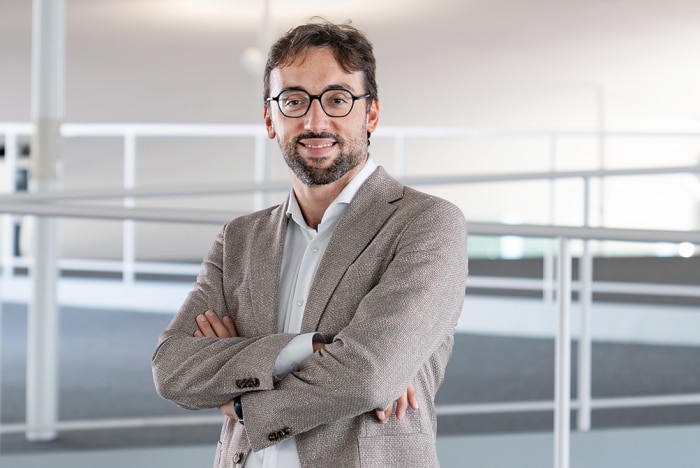
A pioneering 3D map of lipids across the adult mouse brain has earned Gioele La Manno, Ph.D., of EPFL, the 2026 Eppendorf & Science Prize for Neurobiology. His work reveals a previously overlooked layer of neural diversity. One in which distinct lipid patterns help define brain regions, cellular identities, and physiological states.
Congratulations to Gioele La Manno, Ph.D., at École polytechnique fédérale de Lausanne (EPFL), Switzerland, on winning the 2026 Eppendorf & Science Prize for Neurobiology for his pioneering work of whole-brain 3D lipid mapping, providing an atlas of a hidden layer of neural diversity.
“Gioele La Manno’s winning essay describes a new way of thinking about lipids,” said Mattia Maroso, Senior Editor at Science and Chair of the Prize Jury. “Lipids are well-known cellular components that have been considered almost exclusively as structural molecules. Dr. La Manno’s work suggests that lipid heterogeneity defines a hierarchical map of ‘lipizones’ that help define brain regions, cell identities, and physiological states. Deciphering the lipizone map will bring to light new principles of brain organization.”
Lipids form the membranes of brain cells and the myelin that surrounds nerve fibers, but their diversity has been much more difficult to map than the diversity of genes. La Manno and his colleagues developed computational methods to combine millions of imaging mass spectra into the first three-dimensional lipid atlas of the adult mouse brain.
“The findings reveal a layer of brain diversity that has been largely overlooked,” said La Manno. “By making it possible to study where lipids are located and how their distributions change, our work provides a foundation for testing how lipid composition contributes to cell identity, brain function, and disease.”
Zuri Sullivan, Ph.D., Zuri Sullivan, Ph.D., Member of the Whitehead Institute for Biomedical Research and the Whitehead Career Development Professor of Biology at MIT in Cambridge USA, is honored for her work on how the brain distinguishes between different immune challenges to generate distinct states of sickness. Alexander Shakeel Bates, Ph.D., Research Fellow at Harvard Medical School in Boston, USA, is recognized for building and analyzing central nervous system connectomes in the fruit fly.
Eppendorf and the journal Science have been awarding this prestigious prize since 2002. Since its inception, the Prize has recognized nearly 80 winners and finalists - brilliant young scientists at an early stage of their careers.
This year’s prize will be presented for the 25th time on November 15, 2026, in Washington, D.C., USA, during the week of the Society for Neuroscience meeting.
“Gioele La Manno’s winning essay describes a new way of thinking about lipids,” said Mattia Maroso, Senior Editor at Science and Chair of the Prize Jury. “Lipids are well-known cellular components that have been considered almost exclusively as structural molecules. Dr. La Manno’s work suggests that lipid heterogeneity defines a hierarchical map of ‘lipizones’ that help define brain regions, cell identities, and physiological states. Deciphering the lipizone map will bring to light new principles of brain organization.”
Lipids form the membranes of brain cells and the myelin that surrounds nerve fibers, but their diversity has been much more difficult to map than the diversity of genes. La Manno and his colleagues developed computational methods to combine millions of imaging mass spectra into the first three-dimensional lipid atlas of the adult mouse brain.
“The findings reveal a layer of brain diversity that has been largely overlooked,” said La Manno. “By making it possible to study where lipids are located and how their distributions change, our work provides a foundation for testing how lipid composition contributes to cell identity, brain function, and disease.”
Two finalists recognized for pioneering contributions in neurobiology
Zuri Sullivan, Ph.D., Zuri Sullivan, Ph.D., Member of the Whitehead Institute for Biomedical Research and the Whitehead Career Development Professor of Biology at MIT in Cambridge USA, is honored for her work on how the brain distinguishes between different immune challenges to generate distinct states of sickness. Alexander Shakeel Bates, Ph.D., Research Fellow at Harvard Medical School in Boston, USA, is recognized for building and analyzing central nervous system connectomes in the fruit fly.
Eppendorf and the journal Science have been awarding this prestigious prize since 2002. Since its inception, the Prize has recognized nearly 80 winners and finalists - brilliant young scientists at an early stage of their careers.
This year’s prize will be presented for the 25th time on November 15, 2026, in Washington, D.C., USA, during the week of the Society for Neuroscience meeting.
もっと読む
Downloads

Press Release
PDF 0.36 MB

Press Image
PNG 1.06 MB