メニュー
JP | JPY
-
-
-
- Challenges and Chances: A Review of the 1st Stem Cell Community Day
- Summertime, and the Livin’ Is Easy…
- Follow-on-Biologics – More than Simple Generics
- Bacteria Versus Body Cells: A 1:1 Tie
- Behind the Crime Scene: How Biological Traces Can Help to Convict Offenders
- Every 3 Seconds Someone in the World Is Affected by Alzheimer's
- HIV – It’s Still Not Under Control…
- How Many Will Be Convicted This Time?
- Malaria – the Battle is Not Lost
- Physicians on Standby: The Annual Flu Season Can Be Serious
- At the Forefront in Fighting Cancer
- Molecular Motors: Think Small and yet Smaller Again…
- Liquid Biopsy: Novel Methods May Ease Cancer Detection and Therapy
- They Are Invisible, Sneaky and Disgusting – But Today It’s Their Special Day!
- How Many Cells Are in Your Body? Probably More Than You Think!
- What You Need to Know about Antibiotic Resistance – Findings, Facts and Good Intentions
- Why Do Old Men Have Big Ears?
- The Condemned Live Longer: A Potential Paradigm Shift in Genetics
- From Research to Commerce
- Chronobiology – How the Cold Seasons Influence Our Biorhythms
- Taskforce Microbots: Targeted Treatment from Inside the Body
- Eyes on Cancer Therapy
-
-

-
-
-
- Challenges and Chances: A Review of the 1st Stem Cell Community Day
- Summertime, and the Livin’ Is Easy…
- Follow-on-Biologics – More than Simple Generics
- Bacteria Versus Body Cells: A 1:1 Tie
- Behind the Crime Scene: How Biological Traces Can Help to Convict Offenders
- Every 3 Seconds Someone in the World Is Affected by Alzheimer's
- HIV – It’s Still Not Under Control…
- How Many Will Be Convicted This Time?
- Malaria – the Battle is Not Lost
- Physicians on Standby: The Annual Flu Season Can Be Serious
- At the Forefront in Fighting Cancer
- Molecular Motors: Think Small and yet Smaller Again…
- Liquid Biopsy: Novel Methods May Ease Cancer Detection and Therapy
- They Are Invisible, Sneaky and Disgusting – But Today It’s Their Special Day!
- How Many Cells Are in Your Body? Probably More Than You Think!
- What You Need to Know about Antibiotic Resistance – Findings, Facts and Good Intentions
- Why Do Old Men Have Big Ears?
- The Condemned Live Longer: A Potential Paradigm Shift in Genetics
- From Research to Commerce
- Chronobiology – How the Cold Seasons Influence Our Biorhythms
- Taskforce Microbots: Targeted Treatment from Inside the Body
- Eyes on Cancer Therapy
-
-
JP | JPY
Sorry, we couldn't find anything on our website containing your search term.
- ホーム
- Lab Academy
- Life Science
- Cell Biology
- Choosing an Automated Liquid Handling System
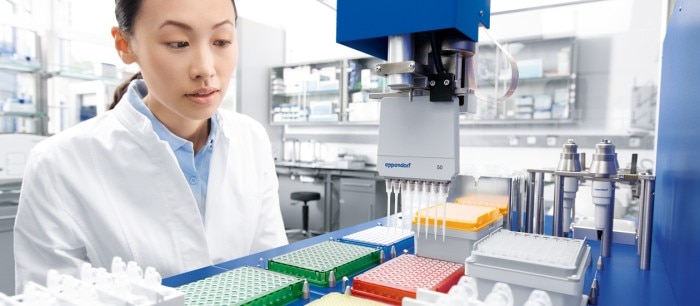
Choosing the right lab automation technology
Lab Academy
- 細胞生物学
- PCR
- 自動化
- 分注器
- リキッドハンドリングワークステーション
- エッセー
Choosing a Robotic Lab Automation System
The growing need for lab automation technology
As we know, sample prep is a multifactorial process and there are opportunities for errors to creep in at every stage. Indeed, sample collection, preparation and processing is by far the largest source of error in analytical laboratories [1]. The human factor comes into play here, with the individual carrying out an experiment being the single most likely source of data variation [2]. Inconsistent dilution techniques between samples, differences between the pipetting of multiple lab technicians, variation across the day, difference in concentration across assays can all compromise results down the line, potentially leading to poor quality data and costly re-runs.
もっと読む
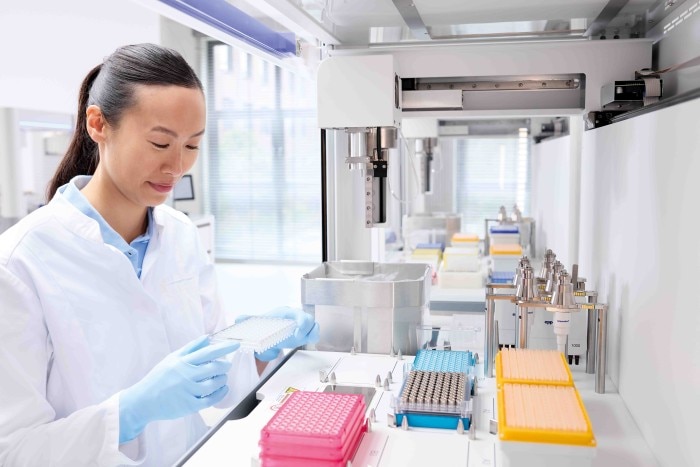
The need for accurate, consistent sample prep is more keenly felt with the continuing trend of decreasing sample size and increasing sensitivity of analytical instrumentation. Molecular applications such as real-time PCR (qPCR), digital PCR (dPCR) and Next Generation Sequencing (NGS) all work with sample volumes in the low microliter (µL) range. Working with such tiny volumes, susceptibility to unwanted sample variability increases significantly. Any interventions that ensure assay set up is as consistent as possible will ultimately have a positive impact on data quality. This has driven demand for liquid automation systems, such as epMotion® , to ensure precision and repeatability. These systems are a core part of modern automation laboratory technology.
もっと読む
_700.jpg)
What is automation in laboratory environments and what are the benefits?
Requiring such high levels of skill and accuracy, it is little wonder that this complex, time and labour-intensive process causes a widely recognised bottleneck in lab workflows. Over the last decade, or more, many scientists have been turning to lab automation robotics as a solution for automation. This shift has been particularly helpful for labs under pressure to process large volumes of assays quickly, efficiently and accurately, and also improving consistency while normalizing samples.
One of the most prevalent misconceptions about laboratory automation is that it is all about speed. However, when comparing manual vs automatic approaches, speed is only one factor. It is not the be all and end all when it comes to introducing automation into the liquid handling process. The additional advantages of laboratory automation lie in facilitating sample throughput with improved accuracy and minimised risk of error, and also increasing productivity. Switching to an automated workstation free up highly trained researchers from routine sample prep to focus on the skilled analysis and interpretation of the results.
Moreover, transferring the strain of performing these repetitive manual tasks to an automation workstation will benefit your work in the lab, too. Automated pipetting ergonomics are significantly better than those for manual pipetting. Repetitive strain injury (RSI) from use of manual pipettes and dispensers is now well documented and understood; such workplace injuries can impact lab productivity, staff turnover and even lead to costly compensation claims [3].
Top tip: Avoid overly complex robotic lab automation systems!
もっと読む
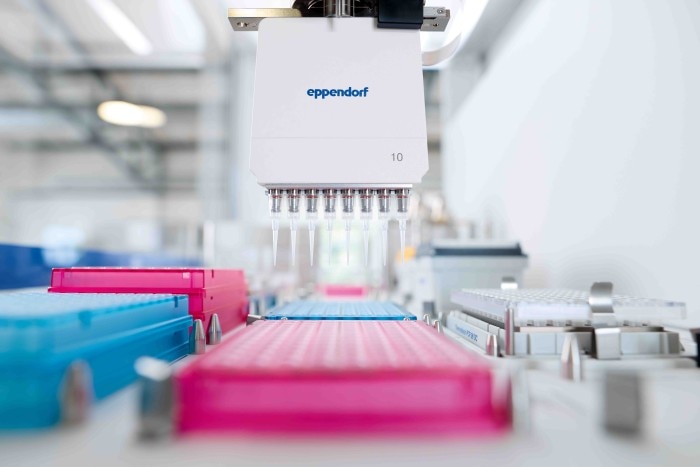
While sample preparation using lab automation technology is now relatively commonplace, the introduction of such systems has not been without its share of difficulties. While it is easy to buy into claims about the latest revolutionary, fully robotic lab automation systems that profess to be the answer to a scientists’ every problem, in practice many require long, intensive operator training, and users all too often find them challenging to reconfigure between different sample runs, and different applications.
So, we are left with two extremes. At one end of the scale, we have the highly skilled technician performing lengthy manual liquid handling who is fallible to human error; and at the other end, we have expensive, highly complex lab automation robotics, that not only requires lengthy and intensive operator training, but also significant investment.
So, we are left with two extremes. At one end of the scale, we have the highly skilled technician performing lengthy manual liquid handling who is fallible to human error; and at the other end, we have expensive, highly complex lab automation robotics, that not only requires lengthy and intensive operator training, but also significant investment.
もっと読む
Fortunately, there is a happy medium with lab automation!
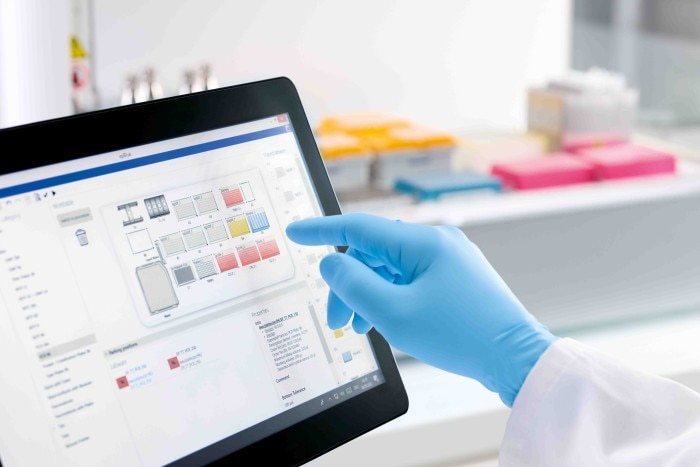
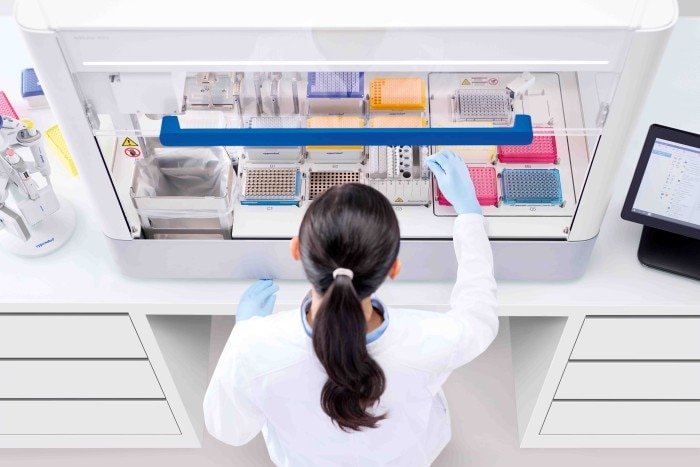
Modern lab automation systems and automated liquid dispensing systems are now available to suit all budgets and workloads. These systems are designed to improve consistency and efficiency by eliminating both person-to-person and day-to-day variability. The best examples require hours rather than days of operator training, and are easy and intuitive to use. Many lab automation robotics, including Eppendorf epMotion® systems , integrate user-friendly computer interfaces - including pre-optimized commands and step-by-step programming guidance for the most common applications. This makes operating quick and easy, yet allows for customization to adjust pipetting performance to the most demanding tasks. A small instrument footprint frees up bench space, while walk-away functionality also frees up researchers’ time.
もっと読む
Fail safe features to avoid human error
Even lab workflow automation requires an element of manual input, however, and with this comes the inherent risk of human error. The latest systems include fail safe features to avoid mistakes, such as virtual 3D run simulation to allow checks of the programmed method for errors, and on deck checks to ensure correct layout, avoiding crashes as a result. This balance between manual control and automation highlights the practical benefits when evaluating manual vs automated workflows.
Considerations when choosing the best lab automation robotics system for your lab
In addition to the many functional considerations when choosing an automated workstation, including running costs, availability of consumables, ease of use, and the level of ongoing support provided by the manufacturer should also be taken into account. It’s important to ask for a demonstration of any system you are considering purchasing so that you can be confident it meets all of your needs, fully. Making the right choice in lab automation technology for your sample preparation process will pave the way for improved test accuracy and reproducibility, whilst increasing productivity levels. Reaping these benefits of robotic lab automation can have an important impact on your scientific output efficiency or businesses’ ability to bring new products to market quickly, safely and efficiently.
もっと読む
References:
[1] Agilent Technologies Sample preparation fundamentals for chromatography. publication no 5991-3326EN.
[2] Bustin.S.A (2002) Quantification of mRNA using real-time reverse transcription PCR (RT-PCR): trends and problems. Journal of Molecular Endocrinology. Aug 2002 vol.29 no.1.
[3] http://www.repetitivestraininjury.org.uk/employment-and-legal.html
[1] Agilent Technologies Sample preparation fundamentals for chromatography. publication no 5991-3326EN.
[2] Bustin.S.A (2002) Quantification of mRNA using real-time reverse transcription PCR (RT-PCR): trends and problems. Journal of Molecular Endocrinology. Aug 2002 vol.29 no.1.
[3] http://www.repetitivestraininjury.org.uk/employment-and-legal.html
もっと読む