メニュー
JP | JPY
-
-
-
- Challenges and Chances: A Review of the 1st Stem Cell Community Day
- Summertime, and the Livin’ Is Easy…
- Follow-on-Biologics – More than Simple Generics
- Bacteria Versus Body Cells: A 1:1 Tie
- Behind the Crime Scene: How Biological Traces Can Help to Convict Offenders
- Every 3 Seconds Someone in the World Is Affected by Alzheimer's
- HIV – It’s Still Not Under Control…
- How Many Will Be Convicted This Time?
- Malaria – the Battle is Not Lost
- Physicians on Standby: The Annual Flu Season Can Be Serious
- At the Forefront in Fighting Cancer
- Molecular Motors: Think Small and yet Smaller Again…
- Liquid Biopsy: Novel Methods May Ease Cancer Detection and Therapy
- They Are Invisible, Sneaky and Disgusting – But Today It’s Their Special Day!
- How Many Cells Are in Your Body? Probably More Than You Think!
- What You Need to Know about Antibiotic Resistance – Findings, Facts and Good Intentions
- Why Do Old Men Have Big Ears?
- The Condemned Live Longer: A Potential Paradigm Shift in Genetics
- From Research to Commerce
- Chronobiology – How the Cold Seasons Influence Our Biorhythms
- Taskforce Microbots: Targeted Treatment from Inside the Body
- Eyes on Cancer Therapy
-
-

-
-
-
- Challenges and Chances: A Review of the 1st Stem Cell Community Day
- Summertime, and the Livin’ Is Easy…
- Follow-on-Biologics – More than Simple Generics
- Bacteria Versus Body Cells: A 1:1 Tie
- Behind the Crime Scene: How Biological Traces Can Help to Convict Offenders
- Every 3 Seconds Someone in the World Is Affected by Alzheimer's
- HIV – It’s Still Not Under Control…
- How Many Will Be Convicted This Time?
- Malaria – the Battle is Not Lost
- Physicians on Standby: The Annual Flu Season Can Be Serious
- At the Forefront in Fighting Cancer
- Molecular Motors: Think Small and yet Smaller Again…
- Liquid Biopsy: Novel Methods May Ease Cancer Detection and Therapy
- They Are Invisible, Sneaky and Disgusting – But Today It’s Their Special Day!
- How Many Cells Are in Your Body? Probably More Than You Think!
- What You Need to Know about Antibiotic Resistance – Findings, Facts and Good Intentions
- Why Do Old Men Have Big Ears?
- The Condemned Live Longer: A Potential Paradigm Shift in Genetics
- From Research to Commerce
- Chronobiology – How the Cold Seasons Influence Our Biorhythms
- Taskforce Microbots: Targeted Treatment from Inside the Body
- Eyes on Cancer Therapy
-
-
JP | JPY
Sorry, we couldn't find anything on our website containing your search term.
Role of automation in advancing clinical diagnostics and genomic medicine
news
- プレスリリース
Mahesh Kalikiri, Automation Product and Application Manager at Eppendorf in Dubai, writing for Clinical Laboratory International
Driven by the convergence of high-throughput genomics, precision medicine, and an ever-increasing demand for rapid turnaround times for test results, laboratories are undergoing a fundamental shift, requiring novel solutions to increase capacity while maintaining reproducibility.
In the latest article in Clinical Laboratory International, Mahesh Kalikiri, Automation Product and Application Manager, discusses how automation is advancing clinical diagnostics and genomic medicine by offering a solution to support the rapid increase in demand for reliable and accurate sequencing.
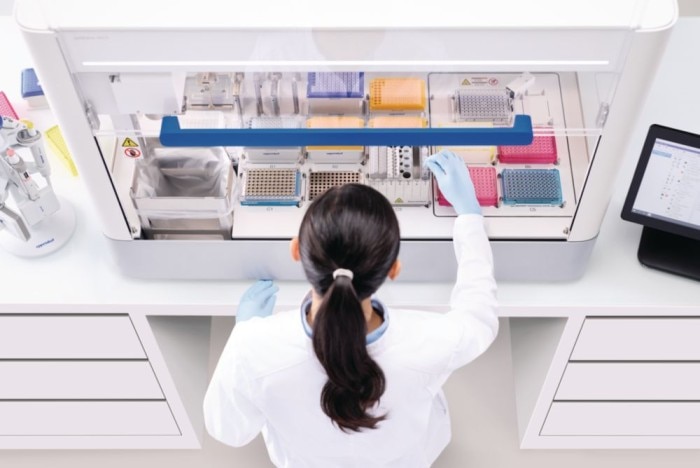
The article explores how automated liquid handling systems are supporting wide-scale rollout of Next Generation Sequencing (NGS) workflows, accelerating time to diagnosis in clinical settings. These advanced automated workflows are enabling precision medicine in diseases such as cancer, facilitating detection of a patient’s specific disease-promoting mutations, informing targeted therapeutic options.
Another area where automation is providing novel insights is in whole-genome sequencing, which can identify associations between genomic variants and disease prevalence in a population. In the article, Mahesh explains how integrating automation can support advancement and scale-up of national genomic medicine initiatives while minimizing cost.
Visit the Clinical Laboratory International website to read the full article: https://clinlabint.com/role-of-automation-in-advancing-clinical-diagnostics-and-genomic-medicine/
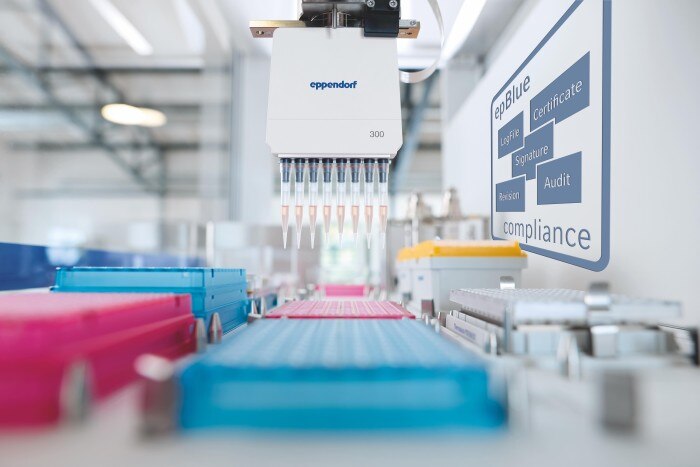
Eppendorf’s series of epMotion® liquid handling workstations are designed to support NGS workflows, automating reagent kits and standardized protocols which can be tedious, time-consuming, or error-prone when performed manually.
By integrating automation into NGS workflows, researchers are overcoming the technical challenges limiting wide-spread, rapid sequencing, increasing reproducibility, standardizing processes and increasing throughput.
Learn more about our epMotion solutions here: https://www.eppendorf.com/en/own-your-solution/epmotion-method-overview/
In the latest article in Clinical Laboratory International, Mahesh Kalikiri, Automation Product and Application Manager, discusses how automation is advancing clinical diagnostics and genomic medicine by offering a solution to support the rapid increase in demand for reliable and accurate sequencing.
The article explores how automated liquid handling systems are supporting wide-scale rollout of Next Generation Sequencing (NGS) workflows, accelerating time to diagnosis in clinical settings. These advanced automated workflows are enabling precision medicine in diseases such as cancer, facilitating detection of a patient’s specific disease-promoting mutations, informing targeted therapeutic options.
Another area where automation is providing novel insights is in whole-genome sequencing, which can identify associations between genomic variants and disease prevalence in a population. In the article, Mahesh explains how integrating automation can support advancement and scale-up of national genomic medicine initiatives while minimizing cost.
Visit the Clinical Laboratory International website to read the full article: https://clinlabint.com/role-of-automation-in-advancing-clinical-diagnostics-and-genomic-medicine/
Eppendorf’s series of epMotion® liquid handling workstations are designed to support NGS workflows, automating reagent kits and standardized protocols which can be tedious, time-consuming, or error-prone when performed manually.
By integrating automation into NGS workflows, researchers are overcoming the technical challenges limiting wide-spread, rapid sequencing, increasing reproducibility, standardizing processes and increasing throughput.
Learn more about our epMotion solutions here: https://www.eppendorf.com/en/own-your-solution/epmotion-method-overview/
もっと読む